
Comprehensive Guide to the United Arab Emirates (UAE)
The United Arab Emirates (UAE) is a federation of seven emirates located in the Middle East, known for its economic prosperity, modern infrastructure, rich cultural heritage, and thriving tourism industry. It is a global hub for business, luxury, and innovation.
1. Geographical Overview
The UAE is strategically located on the Arabian Peninsula, bordered by Saudi Arabia to the south and west, Oman to the southeast, and the Persian Gulf to the north. It has a total land area of approximately 83,600 square kilometers and features vast deserts, coastal regions, mountains, and islands. The country experiences a hot desert climate, with extremely high temperatures in summer and mild winters.
2. Political Structure
The UAE is a federal absolute monarchy comprising seven emirates: Abu Dhabi, Dubai, Sharjah, Ajman, Umm Al-Quwain, Ras Al Khaimah, and Fujairah.
- President: The ruler of Abu Dhabi, currently Sheikh Mohamed bin Zayed Al Nahyan.
- Vice President & Prime Minister: The ruler of Dubai, currently Sheikh Mohammed bin Rashid Al Maktoum.
- Federal Supreme Council (FSC): Composed of the rulers of all seven emirates.
- National Assembly (Federal National Council – FNC): Has advisory powers but does not create laws independently.
The UAE follows Sharia law in certain aspects of personal and criminal law, while a civil legal system governs business and international dealings.
3. Economy & Business Opportunities
The UAE has one of the most diversified and fastest-growing economies in the world, largely driven by oil, trade, tourism, and finance.
Key Economic Sectors
- Oil & Gas: Abu Dhabi is the largest oil producer, contributing significantly to national GDP.
- Real Estate & Construction: Dubai and Abu Dhabi are known for their luxury developments, skyscrapers, and artificial islands.
- Tourism & Hospitality: The country is a global tourist hotspot with luxury hotels, beaches, and iconic attractions.
- Trade & Logistics: Dubai’s Jebel Ali Port is one of the largest and busiest ports globally.
- Finance & Technology: Dubai International Financial Centre (DIFC) and Abu Dhabi Global Market (ADGM) serve as major financial hubs.
Why Invest in the UAE?
- Tax-free income & business-friendly policies
- World-class infrastructure and transportation
- Strategic location connecting East and West
- Growing startup and tech ecosystem
- Access to global talent and a diverse workforce
4. Social & Cultural Aspects
The UAE is a melting pot of over 200 nationalities, with a blend of Arab traditions and modern influences. The official language is Arabic, but English is widely spoken.
Key Cultural Aspects
- Islam is the dominant religion, but the country promotes religious tolerance.
- Emirati hospitality is deeply rooted in tradition, with a strong emphasis on respect and generosity.
- Traditional dress: Men wear Kandura, while women wear Abaya, although Western attire is common.
- Festivals & Celebrations: Includes Eid al-Fitr, Eid al-Adha, UAE National Day (December 2), and Dubai Shopping Festival.
5. Tourist Attractions in Each Emirate
Abu Dhabi (Capital City)
- Sheikh Zayed Grand Mosque – Architectural masterpiece
- Louvre Abu Dhabi – A world-class museum
- Ferrari World – Home to the world’s fastest roller coaster
- Yas Island – Luxury leisure destination
Dubai
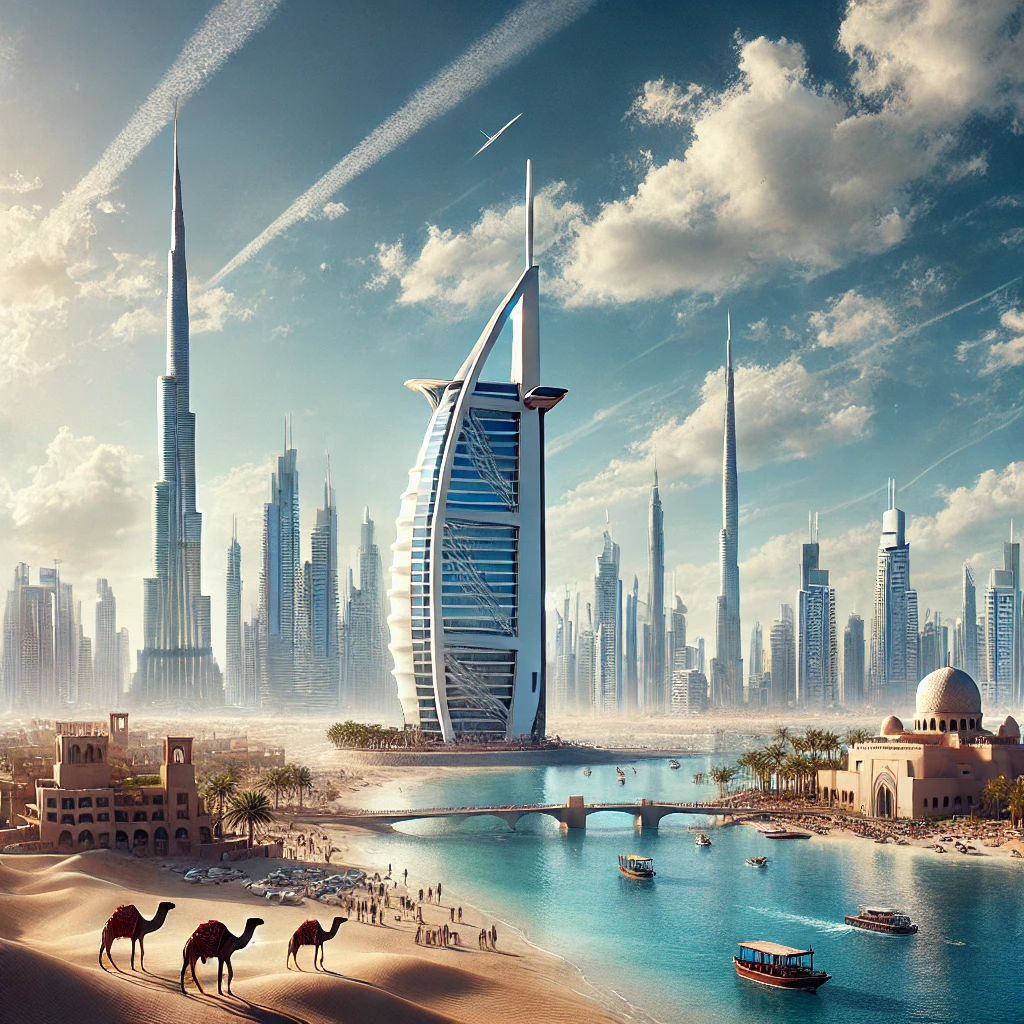
- Burj Khalifa – Tallest building in the world
- Palm Jumeirah – Artificial island with resorts and beaches
- Dubai Mall & Burj Al Arab – Luxury shopping and hospitality
- Desert Safari & Dubai Creek – Adventure and heritage
Sharjah (Cultural Capital)
- Sharjah Museum of Islamic Civilization
- Al Noor Island – Beautiful gardens and art installations
- Mleiha Archaeological Centre – Historic desert exploration
Ajman
- Ajman Museum – Showcasing UAE history
- Al Zorah Nature Reserve – Mangroves and birdwatching
Umm Al-Quwain
- Dreamland Aqua Park – Family water park
- Al Sinniyah Island – A nature reserve with flamingos
Ras Al Khaimah
- Jebel Jais – UAE’s highest mountain and adventure hub
- Dhayah Fort – Historical site with stunning views
Fujairah
- Al Bidyah Mosque – Oldest mosque in the UAE
- Snoopy Island – Diving and snorkeling paradise
6. Standard of Living & Job Market
- High salaries and tax-free income attract expatriates.
- World-class healthcare and education systems available.
- Luxury housing options in cities like Dubai and Abu Dhabi.
- Growing job market in finance, IT, healthcare, construction, and tourism.
7. Ways to Visit & Types of Visas
The UAE offers various visa options for tourists, business visitors, and long-term residents.
Types of Visas:
- Tourist Visa (30-90 days)
- Business Visa
- Golden Visa (for investors, highly skilled professionals)
- Freelance Visa (for independent professionals)
- Student Visa (for international students)
- Work Visa (sponsored by an employer)
8. Pathway to Citizenship & Residency
Residency (Long-term Options):
- Golden Visa (10 years) – For investors, entrepreneurs, scientists, and outstanding professionals.
- Retirement Visa – For individuals over 55 years with financial security.
- Property Investor Visa – For real estate investors.
Pathway to Citizenship:
- Generally not easy for expatriates. However, in 2021, the UAE introduced citizenship by nomination, allowing select professionals, investors, and scientists to apply.
9. Asylum & Immigration Policies
- The UAE does not have a formal asylum system but grants humanitarian visas in exceptional cases.
- Refugees and asylum seekers are handled through UNHCR agreements.
10. Why Visit the UAE?
- Ultra-modern cities with futuristic architecture
- Luxury shopping and entertainment hubs
- Cultural heritage and diverse traditions
- World-class events (Dubai Expo, Abu Dhabi Grand Prix)
- Safe & secure environment with low crime rates
- Tax-free business opportunities
Conclusion
The UAE is a land of opportunities, luxury, and cultural richness. Whether you’re looking to visit, work, invest, or settle, the country offers a high standard of living and limitless possibilities.