
Comprehensive Guide to Germany
Germany is one of the most influential countries in Europe, known for its strong economy, rich history, diverse culture, and high standard of living. Whether you’re considering visiting, working, studying, or even settling down, Germany offers a range of opportunities. This guide covers all aspects of Germany in detail, including geography, economy, politics, social culture, major cities, pathways to citizenship, visas, job opportunities, and tourist attractions.
1. Geographical Overview
Germany is located in Central Europe and is the continent’s most populous country, with over 83 million people. It shares borders with nine countries:
- North: Denmark
- East: Poland, Czech Republic
- South: Austria, Switzerland
- West: France, Luxembourg, Belgium, Netherlands
Major Geographical Features
- North: Lowlands and coastal areas along the North Sea and the Baltic Sea (cities like Hamburg and Bremen).
- Central Germany: Rolling hills and forests (Harz Mountains, Thuringian Forest).
- South: Mountainous regions (Bavarian Alps), featuring Germany’s highest peak, Zugspitze (2,962 meters).
- Rivers: Rhine, Elbe, Danube, and Main are key rivers that contribute to trade and tourism.
2. Germany’s Economy
Germany has the largest economy in Europe and the fourth-largest in the world. It is a global leader in manufacturing, engineering, and technology.
Key Economic Sectors
- Automobile Industry: Germany is home to brands like BMW, Mercedes-Benz, Volkswagen, and Audi.
- Technology & Engineering: Siemens, Bosch, and SAP are global leaders in innovation.
- Pharmaceuticals & Chemicals: Bayer and BASF are major players.
- Finance & Banking: Frankfurt is the financial hub of Europe, hosting the European Central Bank.
- Tourism: Germany attracts millions of tourists each year, boosting the economy.
Germany’s Economic Strengths
- High export rate, especially in automobiles and machinery.
- Low unemployment rate and strong labor laws.
- Advanced infrastructure and public transport.
- Strong education system, producing skilled professionals.
3. Political System
Germany is a federal parliamentary republic, meaning it has a chancellor as the head of government and a president with a ceremonial role.
Government Structure
- Chancellor (Head of Government): Currently leads Germany’s policies and administration.
- President (Head of State): Symbolic role, representing Germany internationally.
- Parliament: Divided into Bundestag (elected members) and Bundesrat (state representatives).
- Federal States: Germany consists of 16 federal states (Bundesländer), each with its own government.
4. Social and Cultural Aspects
Germany has a rich cultural heritage, with strong traditions in music, literature, and philosophy.
Languages
- German is the official language, but English is widely spoken, especially in business and tourist areas.
Religion
- Predominantly Christian (Protestant and Catholic).
- Growing Muslim and other religious communities due to immigration.
- Increasing secularism, especially in cities.
Lifestyle & Society
- Germans value punctuality, efficiency, and privacy.
- High work-life balance, with strong labor laws.
- Environmental awareness: Germany is a leader in renewable energy and green policies.
5. Major Cities & Tourist Attractions
Germany offers diverse travel experiences, from historic sites to modern cities.
Berlin (Capital)
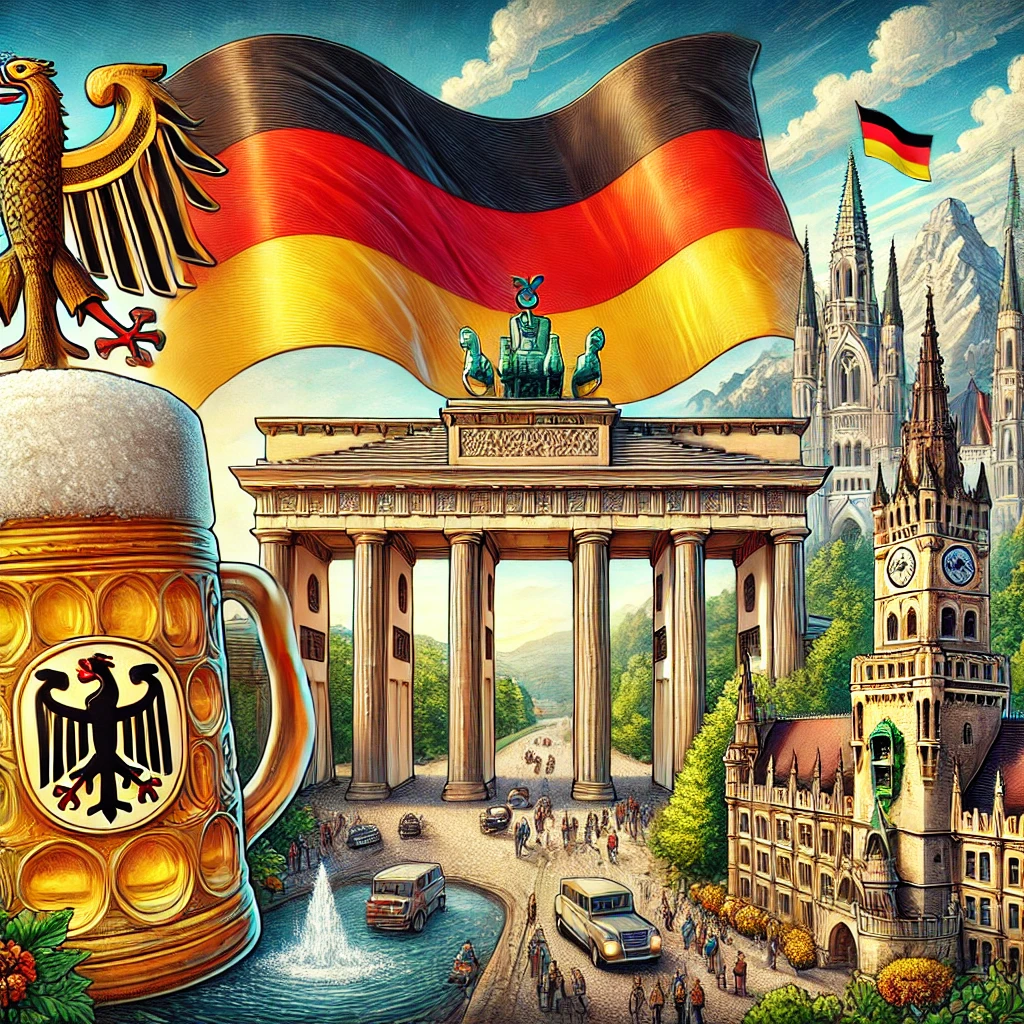
- Brandenburg Gate: Iconic symbol of Germany.
- Berlin Wall & East Side Gallery: History of Cold War division.
- Museum Island: UNESCO-listed collection of museums.
Munich (Bavaria)
- Neuschwanstein Castle: Fairytale-like castle.
- Oktoberfest: World-famous beer festival.
- English Garden: One of the largest urban parks in the world.
Frankfurt (Finance Hub)
- European Central Bank headquarters.
- Römerberg: Historic town square.
- Main Tower: Best skyline view.
Hamburg (Port City)
- Elbphilharmonie: Architectural marvel and concert hall.
- Miniatur Wunderland: World’s largest model railway.
- Reeperbahn: Lively nightlife district.
Cologne
- Cologne Cathedral: UNESCO World Heritage site.
- Rhine River Cruises: Scenic boat tours.
- Chocolate Museum: A paradise for chocolate lovers.
Stuttgart
- Mercedes-Benz & Porsche Museums.
- Wilhelma Zoo and Botanical Garden.
- Black Forest nearby: Ideal for nature lovers.
Dresden
- Zwinger Palace: Stunning Baroque architecture.
- Semper Opera House: Prestigious opera venue.
6. Pathways to Citizenship & Visas
Ways to Obtain German Citizenship
- Naturalization (After 8 years of legal residence).
- Birthright Citizenship (If one parent is German or a legal resident for 8+ years).
- Marriage to a German citizen (Expedited process).
- Descent (If you have German ancestry).
Visa Types
- Schengen Visa (For short-term stays up to 90 days).
- Work Visa (For skilled professionals).
- Student Visa (For university admission).
- Job Seeker Visa (For those searching for jobs in Germany).
- Asylum (For refugees fleeing war or persecution).
7. Job Opportunities in Germany
Germany has a high demand for skilled workers, especially in:
- Engineering & IT
- Healthcare (Doctors, Nurses, Care Workers)
- Manufacturing & Automotive
- Finance & Banking
Minimum Wage: €12.41 per hour (as of 2024).
Average Salary: €50,000 per year.
Germany has one of the best work-life balances in Europe, with paid leave, strong job security, and benefits.
8. Standard of Living
- Affordable healthcare: Universal healthcare system.
- High safety levels.
- Efficient public transport: Trains, trams, buses.
- Affordable education: Free or low-cost university tuition.
9. Reasons to Visit Germany
- Historical Significance: WWII sites, castles, medieval towns.
- World-Class Festivals: Oktoberfest, Christmas markets.
- Natural Beauty: Alps, Black Forest, Rhine Valley.
- Food & Beer: Traditional dishes like bratwurst, pretzels, schnitzel, and world-famous beer.
- Innovation & Modernity: Cutting-edge technology and business opportunities.
Final Thoughts
Germany is a global powerhouse with incredible opportunities for visitors, students, professionals, and immigrants. Whether you’re traveling, working, or planning to settle, Germany offers a high quality of life, cultural richness, and economic stability.